

Introduction
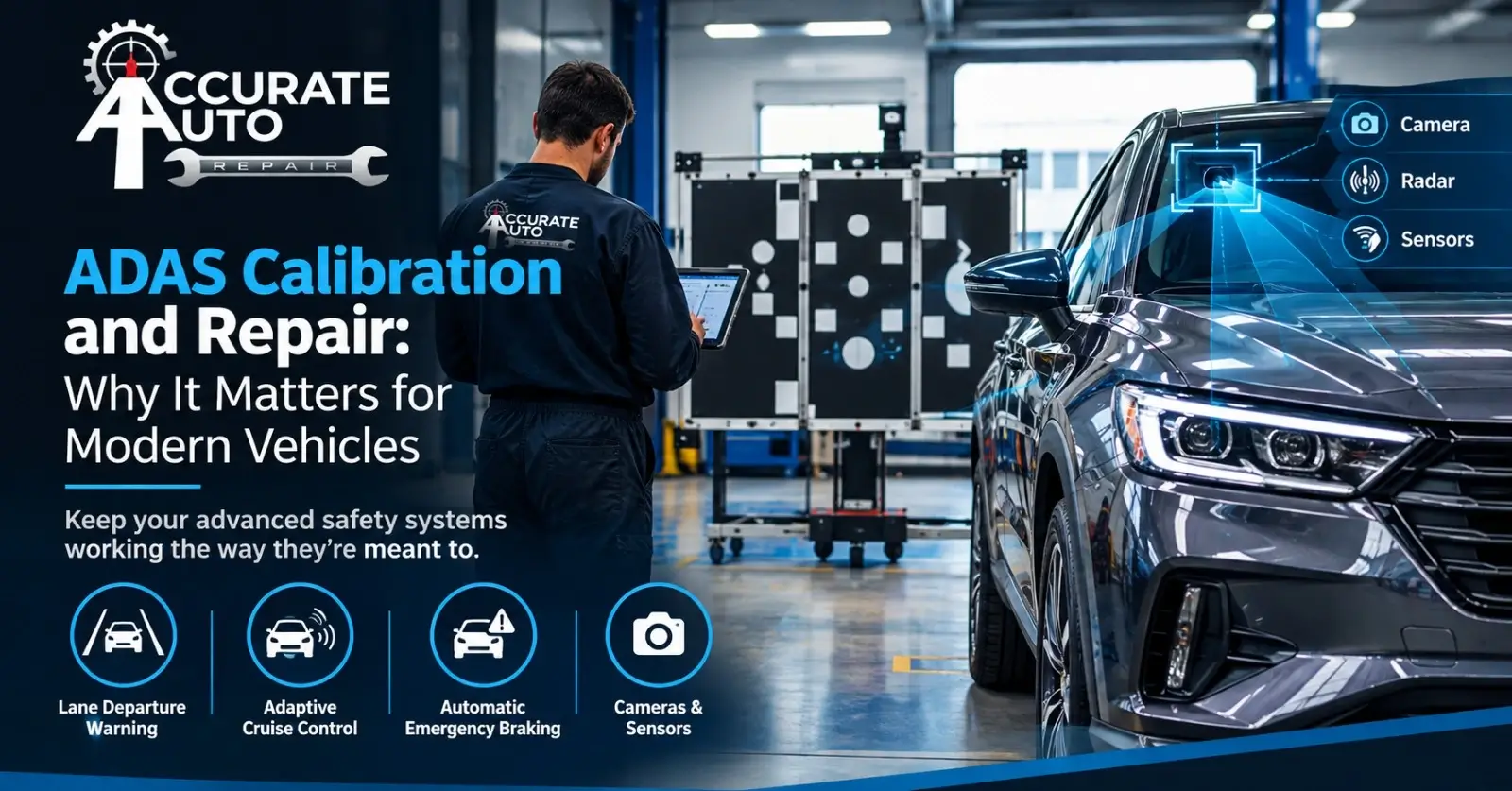
Modern vehicles are equipped with advanced safety technologies designed to help drivers avoid accidents and stay safer on the road. These technologies are collectively known as Advanced Driver Assistance Systems (ADAS). Features such as automatic emergency braking, lane departure warning, adaptive cruise control, and parking assistance rely on cameras, radar, and sensors to monitor the vehicle's surroundings.
When these systems are not properly aligned or calibrated, they may not work as intended. That is why professional ADAS Calibration and Repair is an important part of maintaining many modern vehicles.
What Is ADAS Calibration and Repair?
ADAS calibration involves adjusting the cameras, radar sensors, and other components used by a vehicle's driver assistance systems so they can accurately detect road conditions, vehicles, pedestrians, lane markings, and other objects.
Calibration may be required after certain repairs or changes to the vehicle. For example, replacing a windshield, repairing collision damage, changing suspension components, or performing wheel alignment can affect the position of sensors and cameras.
ADAS repair, on the other hand, involves diagnosing and correcting problems with the components or systems that support these safety features. A professional technician can identify whether the issue is related to a sensor, camera, wiring, software, mounting position, or another component.
Why Is ADAS Calibration Important?
ADAS features depend on accurate information. Even a small change in the position or angle of a camera or sensor can affect how the system interprets what is happening around the vehicle.
For example, if a forward-facing camera is not correctly calibrated, the vehicle may have difficulty accurately identifying lane markings or objects ahead. Similarly, incorrectly positioned radar sensors can affect systems such as adaptive cruise control and automatic emergency braking.
Proper calibration helps ensure that the vehicle's safety systems can operate according to the manufacturer's specifications.
When Does a Vehicle Need ADAS Calibration?
Not every vehicle needs calibration after every repair, but certain situations can make it necessary. Common examples include:
- Windshield replacement
- Collision or accident repairs
- Front-end or bumper repairs
- Suspension repairs
- Wheel alignment
- Replacement of ADAS cameras or radar sensors
- Changes involving sensor mounting locations
- Certain steering or chassis repairs
- Warning lights or ADAS-related error messages
Because calibration requirements vary by vehicle make and model, it is important to have the vehicle properly inspected after relevant repairs.
Common ADAS Features That May Require Calibration
Modern vehicles can have several different driver assistance technologies. Some common systems include:
Adaptive Cruise Control
Adaptive cruise control uses sensors to monitor traffic ahead and automatically adjust vehicle speed to maintain a selected following distance.
Lane Departure Warning
This system uses cameras or other sensors to identify lane markings and can warn the driver if the vehicle begins moving out of its lane unintentionally.
Forward Collision Warning
This technology monitors the road ahead and can alert the driver when a potential forward collision is detected.
The exact ADAS features and calibration requirements depend on the vehicle.
Signs Your ADAS May Need Attention
Drivers should pay attention to warning messages or unusual behavior from their vehicle's safety systems. Possible signs include an ADAS warning light, a message indicating that a safety system is unavailable, lane assistance behaving unexpectedly, or adaptive cruise control becoming unavailable.
However, there may not always be an obvious warning. If your vehicle has undergone a windshield replacement, collision repair, suspension work, or wheel alignment, asking whether ADAS calibration is required can help prevent potential issues.
Why Professional ADAS Calibration and Repair Matters
ADAS technology combines hardware and software, which means calibration is more than simply adjusting a component. The vehicle may require specific procedures, diagnostic equipment, calibration targets, and measurements based on the manufacturer's requirements.
Professional ADAS Calibration and Repair can help identify problems and ensure the vehicle's systems are properly checked after applicable repairs.
Attempting to ignore an ADAS warning or relying on an improperly calibrated system can create unnecessary safety concerns. A qualified automotive repair facility can diagnose the system and determine what service is appropriate for the vehicle.
Choose Accurate Auto Repair in Mississauga
For drivers in Mississauga and the surrounding GTA, Accurate Auto Repair provides professional automotive repair services, including ADAS calibration and repair. The shop works with modern vehicle safety technologies involving cameras, radar, and other sensors.
Whether your vehicle recently had a windshield replacement, collision repair, suspension work, or another repair that may affect ADAS components, a professional inspection can determine whether calibration is needed.
Accurate Auto Repair can help diagnose ADAS-related concerns and provide the appropriate service for your vehicle.
Keep Your Vehicle's Safety Technology Working Properly
Advanced Driver Assistance Systems are becoming increasingly common in today's vehicles. While these technologies can provide valuable driver assistance, they depend on properly functioning and accurately positioned sensors and cameras.
If your vehicle has experienced a repair that may affect ADAS components, or if you notice an ADAS warning or system issue, professional ADAS Calibration and Repair can help determine the cause and the appropriate solution.
For reliable automotive service in Mississauga, contact Accurate Auto Repair to have your vehicle inspected and your ADAS systems properly evaluated.